

I stood in the supplement aisle for a good ten minutes trying to figure out the difference between plain Panax ginseng and Korean red ginseng. Same root, same family, but one bottle costs twice as much and the label reads like it went to finishing school. I am 61, I take a daily blood pressure medication, and I have been using NOW Panax Ginseng for about two years for afternoon energy, so I wanted a straight answer before I spent money on the fancier label.
Here is the short version: Korean red ginseng is Panax ginseng that has been steamed and dried, which changes the ginsenoside profile and gives it a warmer, earthier character. The white Panax ginseng in the NOW bottle is the same root, air dried, and it costs less. Both come from the same plant family. The question is whether the extra processing is worth the extra money for a man my age who just wants steady afternoon energy and a little more drive.
About two years ago, my afternoon was a wall. By 2 PM I was reaching for a third cup of coffee, and by the time I got home from whatever errand or yard work I had lined up, I was done. Linda noticed it before I did. She said I was still fine in the morning, but by dinner I was quiet and I was skipping the evening walk we used to take. That conversation is what got me to my doctor, not the supplement aisle. He checked me over, said my blood pressure was managed fine on my one daily medication, and told me a reputable ginseng was reasonable to try as long as I kept the dose on the label and did not stack it with anything else.
So I did what I usually do when I want a straight answer: I read labels. That is how I landed on NOW Panax Ginseng 500 mg, one capsule with breakfast, 250 capsules to a bottle. It took me a couple of weeks to notice anything, and what I noticed was not a jolt. It was that I stopped looking at the clock at 2 PM. The third cup of coffee went from a daily habit to an occasional one, and then to nothing. I have been taking it most days since, and the bottle still lasts me months. I remember the morning I realized it was working. I had poured my usual second cup and then left it to go cold on the counter because I simply was not thinking about the clock. That is the standard I am comparing the red label against.
| NOW Panax Ginseng 500 mg | Korean Red Ginseng | |
|---|---|---|
| Price | Budget friendly, a bottle lasts months | Typically two to three times the cost |
| Processing | Air dried white ginseng, closer to the raw root | Steamed and dried, which shifts the ginsenoside profile |
| Label transparency | Clear dosage, third party tested, plain veg capsules | Varies a lot by brand, some labels are vague about extract strength |
| Energy support | Steady afternoon lift that built over weeks | Comparable support, some users report a stronger kick |
| Traditional appeal | Practical, modern, easy to keep up | The classic steamed form with centuries of use |
| Best for | A reasonable daily routine you can actually stick with | Traditional use and a premium label |
| Doctor approval | Easy to clear with a doctor, one capsule a day | Same caution needed, especially with blood pressure meds |
Where NOW Panax Ginseng Wins
NOW Panax Ginseng wins on the things that matter after the first week: price, transparency, and consistency. A 250 capsule bottle at 500 mg per capsule lasts me months, because I take one capsule with breakfast and I do not chase a bigger dose. The label tells me exactly what I am getting, the brand does third party testing, and the capsules are plain and easy to swallow. My doctor asked me at my next checkup what I was taking, nodded at the bottle, and said the dose and the timing were sensible. For a man who takes one blood pressure medication and wants to keep his routine simple, that is worth a lot.
I also trust the brand. NOW has been around for decades, they publish their testing, and I do not have to wonder whether the powder inside matches the label. That matters in this category, because I have bought cheap supplements from marketplace sellers before and given them up when I could not verify what was in the bottle. With NOW, I know what I am taking, my doctor knows what I am taking, and the price means I can keep taking it without thinking about it.
Let me be specific about that marketplace seller, because it is the reason I read labels like a skeptic. About a year before I started the NOW bottle, I bought an unbranded tongkat ali from a seller with a name I did not recognize, no lab results on the page, and a label that listed the extract strength in fine print I could barely read. I took it for a few days and then threw it out. Not because it did anything bad. Because I could not tell what was actually in it, and at my age I am not gambling my blood pressure on a mystery capsule. The NOW label lists the root, the strength, the serving, and the testing. That is the whole difference.
There is also the routine question, and routine is half of whether a supplement does anything at all. One capsule with breakfast is easy. I keep the bottle on the kitchen counter next to my blood pressure medication, so I cannot miss it. When I traveled to my daughter's place for a long weekend, I counted six capsules into a cheap weekly organizer from the drugstore and did not think about it again. A red ginseng extract with a dropper or a fancy packet would have been another thing to remember, and I know myself well enough to know I would skip it on a busy morning.
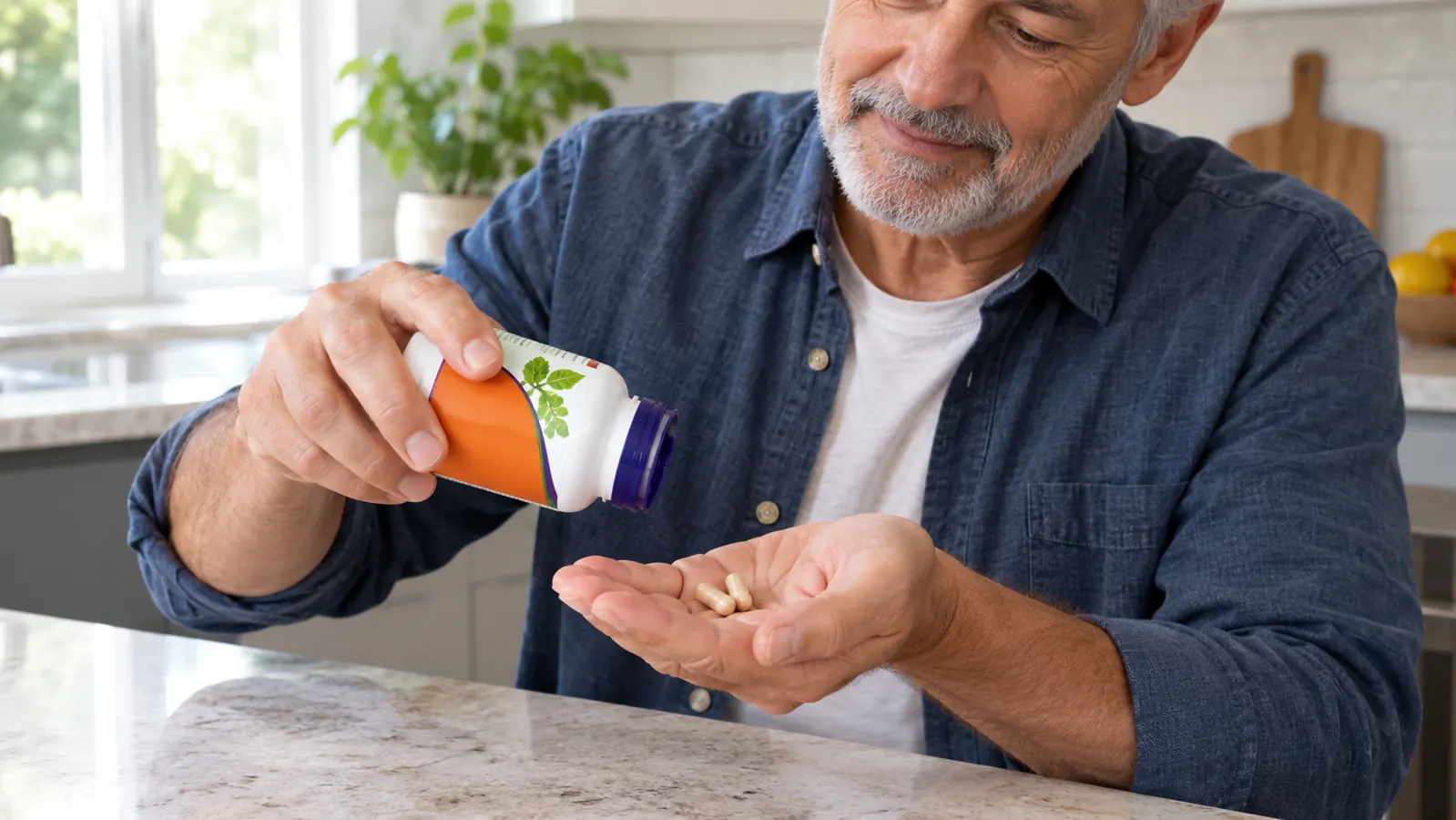
Where Korean Red Ginseng Wins
Korean red ginseng wins on tradition and on the experience of taking it. The steaming process changes the ginsenoside profile, and a lot of people who have used both say the red version feels warmer and a bit more noticeable. If you are the kind of person who wants the classic preparation, the one that has been used in Asia for centuries, the red label is the one you will reach for. There is something to be said for taking the traditional form of a root that has been used that long. A friend of mine, a Korean American guy I worked with on a job site years ago, takes the red extract every morning and swears by the tradition. He is the reason I gave the red label a fair hearing at all.
It also wins if you want a single product that feels like a ritual. The red ginseng bottles tend to come in smaller quantities, the serving is often a liquid extract or a fancier capsule, and the whole experience feels more deliberate. For some men that matters. I am not one of them. I want a bottle I can keep in the kitchen, take with breakfast, and forget about until the next morning. But I would not tell a friend he is wrong for choosing the red label if he likes the tradition and the stronger character.
I want to be fair here, so let me explain what the steaming actually does, the way my doctor's nurse spelled it out for me when I asked. She laughed and said the short version was that steaming changes the root the way roasting changes a peanut. That image stayed with me. The root is harvested, then steamed and dried, and that heat changes some of the ginsenosides, the compounds researchers study in ginseng. Red ginseng is not a different plant. It is the same Panax root with a different preparation, and the traditional use of the red form goes back centuries in Korea. If the ritual and the heritage matter to you, that is a real reason to choose it, not a superficial one.
The honest tradeoff is what you give up for that heritage. The red label usually costs two to three times as much per serving, the bottles are smaller, and the quality varies more from brand to brand because there is no single standard for what 'Korean red ginseng' on a label has to mean. I stood in that aisle and turned over four different red bottles. One listed a specific extract ratio. One just said 'premium red ginseng' with no strength at all. That is exactly the kind of vagueness that made me throw out the tongkat. I am not saying every red brand is vague. I am saying you have to do more homework, and I would rather spend my homework time on the walking.
Start with the label you can actually read and afford
NOW Panax Ginseng gives you a clear 500 mg dose, third party testing, and a bottle that lasts months. Talk to your doctor first, then check today's price on Amazon.
Amazon Check Today's Price on Amazon →
Who Should Buy Which
Buy NOW Panax Ginseng if you want a straightforward, affordable daily routine and you care more about label transparency than a fancy name. Buy Korean red ginseng if you want the traditional steamed preparation and you are willing to pay more for it. Both come from the same root. Neither is a prescription drug, neither replaces your blood pressure medication, and neither should be started without a quick conversation with your doctor, especially if you take anything for blood pressure or your heart. My own rule is to bring the bottle to the pharmacy counter and let the pharmacist see it before I open it. That takes two minutes and it has never once been awkward.
For me, the choice came down to what I would actually keep doing. I have been taking NOW Panax Ginseng for about two years now, and the afternoon energy is real but gradual. It did not hit me like a third cup of coffee. It built up over a few weeks until I noticed I simply had more left at the end of the day. Linda noticed before I did. One evening she said I seemed like myself again after dinner, and that was the moment I stopped second guessing the whole experiment. That is the kind of result I trust, because it matches what my doctor told me to expect: modest, steady, and tied to the walking and the better sleep too.
Who should skip both? Men on nitrates, first of all. If you take any medication for your heart or blood pressure, ginseng is something to clear with your doctor, full stop. And I would add a second group: men who are looking for a pill to undo twenty years of no exercise and late nights. I did not start the NOW bottle and suddenly become the man I was at 40. I started it, I kept walking two miles most mornings with Linda, I cut back to two beers on the weekend, and the energy showed up slowly over about three weeks. The supplement was part of it. It was not all of it. My doctor put it plainly: the pill is the smallest part of the program.
One more thing, and I say this to every man my age who asks me about this category: stay away from the unlabeled stuff. Gas station pills with names like 'rhino' and imported products that promise results overnight have been found by the FDA to contain hidden drug ingredients. That is not a rumor, that is a published warning. The reason I keep coming back to a brand like NOW is that I can read the label, I can look up the testing, and I can hand the bottle to my doctor without embarrassment. There is no version of that with a mystery pill from a convenience store.
The label worth starting with
If you are going to try Panax ginseng, start with the version that is easy to afford, easy to read, and easy to keep taking. Check today's price on Amazon and run it past your doctor.
Amazon Check Today's Price on Amazon →