

Around 57 I started noticing it in the evenings. I would come home from a job that had never really worn me out before, sit down in my chair, and that was it for the night. My drive was down, my stamina was not what it had been, and I did not like admitting any of it. I am Ray, a 61-year-old retired electrician from Parma, Ohio, and I spent a while assuming there was nothing to do about it except get older. Then my doctor checked me over, my blood pressure is managed with one daily medication, no nitrates, and told me a reputable supplement was fine to try alongside more walking and better sleep. The first thing I tried, about three and a half years ago, was Nutricost L-Citrulline.
This guide is the routine I wish someone had walked me through back then. It covers what L-citrulline actually is, how to read the label, when to take it, what to expect in the first weeks, and the habits that made the difference feel real. None of it is medical advice. Check with your own doctor first, especially if you are on blood pressure, heart, or nitrate medication.
Start With the Supplement That Made Sense to Me
Nutricost L-Citrulline 1500mg is the plain, well-reviewed capsule I started with and still take most days. No flavor, no proprietary blend, just the ingredient on the label.
Amazon Check Today's Price on Amazon →Step 1: Understand What L-Citrulline Actually Does
L-citrulline is an amino acid your body already makes and also gets from food. Watermelon is the food most people have heard of. What makes it interesting for circulation is that your body converts some of it into another amino acid, L-arginine, which your body uses to make nitric oxide. Nitric oxide is the molecule that tells blood vessels to relax and widen. Better vessel relaxation means better blood flow, and better blood flow is what supports steady energy and stamina.
I am not a doctor or a pharmacist, so that is the limit of how deep I will go. The practical point is this: L-citrulline is not a stimulant. It does not hit you like caffeine. It works on the circulation side of things, and that means the effects build gradually rather than arriving in twenty minutes.
Reading about it, I kept tripping over the same question: why not just take L-arginine and skip a step? The answer I found, in plain English, is that L-citrulline seems to get absorbed better and stays in the bloodstream longer, which is why so many products in this category switched to it. I am not going to pretend I read a stack of studies. I read enough to understand the basic path, and that was enough to make me comfortable trying it. The one comparison that stuck with me was watermelon. You would have to eat a lot of it to get the amount in a single capsule, and I was not about to eat my way through half a melon every morning. The capsule made the whole thing practical.
Step 2: Read the Label Before You Trust It
The supplement aisle is full of pills with names that sound like racehorses and labels that list a proprietary blend instead of actual amounts. I avoided those entirely. What I wanted was a bottle that told me exactly how much L-citrulline was in each serving, who made it, and nothing else I had to decode.
Nutricost L-Citrulline 1500mg is about as plain as a supplement gets. One capsule, 1500 milligrams of L-citrulline, 180 capsules per bottle, gluten free, and made in a GMP-compliant facility. It has over nine thousand ratings on Amazon and sits around 4.6 stars. That kind of track record mattered to me, because I wanted a label I could trust before I put anything new in my body.
About six months after I started the citrulline, I decided to try tongkat ali and ordered a cheap, unbranded bottle from a marketplace seller because it was cheaper than anything name-brand. The label listed an extract with no third-party testing, no facility information, and a serving size I had to squint to read. I took it for a few days and then threw it out. I could not tell you whether it was any good, because I never trusted it enough to find out. When I replaced it, I bought from a company that put the extract ratio and the milligram amount right on the front of the bottle. Same ingredient, a little more money, but a label I could defend to my wife and my doctor. The label also tells you the serving size, and that is the number to follow. I take the serving on the label, never more, because more is not what the research or the manufacturer recommends. If a bottle tells you to take one capsule a day, take one capsule a day.
Step 3: Pick a Time and Make It Routine
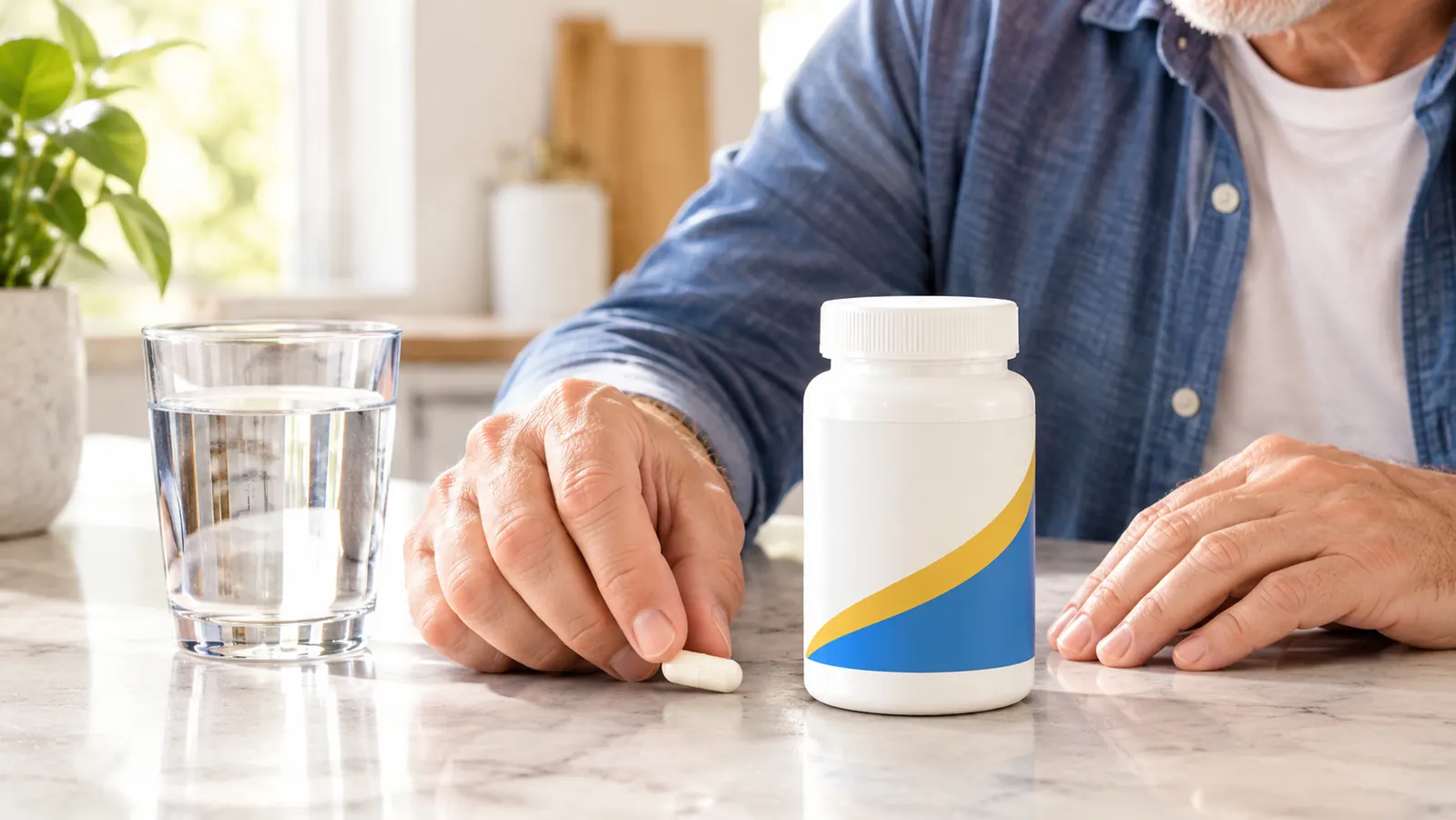
I take my Nutricost L-Citrulline with breakfast. The capsules are plain, no flavor, easy to swallow, and breakfast is the meal I never skip, so it became the anchor of the routine. Some people take it before a workout or before a walk. I found that taking it in the morning worked best for me because I did not have to think about it again for the rest of the day.
Breakfast for me is usually a bowl of oatmeal and a banana, same thing most days, and the capsule goes down with the first sip of coffee. I do not measure anything or make a ceremony out of it. The bottle sits on the counter next to the pill organizer, which has a little compartment for every day of the week, and I refill it every Sunday night while I watch the news. That Sunday ritual is the reason I have not missed a dose in months. There was one stretch early on, maybe the second month, where I forgot to refill the organizer and went three days without the supplement without really noticing. That told me two things. One, the routine was not about dependency, it was about consistency. Two, I needed a better system, so I moved the bottle right next to the coffee maker, where I literally could not miss it. That is where it still lives.
If you are on medication, this is the moment to have the conversation with your doctor. I did. My blood pressure is managed with one daily medication, no nitrates, and my doctor gave me the green light. Do not skip that conversation, because L-citrulline can affect blood pressure and it can interact with nitrates.

Step 4: Give It Weeks, Not Days
Here is the honest part. Nothing happened on day one. Nothing happened on day three. I would not say I noticed a single moment where I suddenly felt different. What I noticed, somewhere in the second or third week, was that the afternoon slump was not hitting as hard and that my two-mile morning walk with Linda felt easier on the days I did not sleep great. I also noticed it in smaller ways. I had more energy left in the evening to be present with my wife instead of fading into the couch. My drive felt closer to what I remembered from my forties. Nothing dramatic, nothing that would make a late-night infomercial, just a steady sense that my body had more in the tank.
The day I remember most clearly was a Tuesday in the third week, on the hill at the end of our walk. There is one stretch near the end of the route that rises for about two hundred yards, and most mornings I would slow down at the top and take a breath before we turned for home. That Tuesday, I crested the hill and realized I had not slowed down at all. It was not a dramatic moment. Linda did not notice anything. But I did, and I marked it. I kept expecting to feel something on the order of a cup of coffee, a sudden lift I could point to. That is not how it worked. The change was more like the difference between a car that starts on the first try and one that needs a moment to turn over. Sometime between week two and week four, mine started starting on the first try more often.
Those results did not happen in a vacuum. During that same stretch I was walking about two miles most mornings, sleeping better, and I had cut back to two beers on weekends. I tell you that because it is true. Supplements support a routine, they do not replace one, and any product that promises instant stamina is selling something I would not put in my body.
Step 5: Watch for What Matters and Adjust
I kept a simple mental log during the first month. Three questions, asked most evenings while I sat on the porch: Did I have more energy in the afternoon? Was I less winded on the hill at the end of our walk? Did I feel more like myself with Linda? Those three questions told me more than any number on a package ever could. I did not write the answers down, but I think writing them down would have helped me see the trend sooner. If you are the kind of person who keeps a notebook, keep one. It is hard to argue with six weeks of entries.
I also paid attention to anything that felt off. I never had a problem with Nutricost L-Citrulline, but if you notice dizziness, headache, or anything unusual, stop and talk to your doctor. That is not a sign the product failed. That is a sign you are listening to your body, which is the whole point of doing this sensibly.
Three and a half years later, I still take it most days. It is not the only thing I do, but it is the foundation. It is the supplement I recommend to friends who ask, and the one I would start with again if I had to do it all over. My advice to you is simple: pick one reputable bottle, read the label, take the serving it says, give it a full month, and keep walking. That is the whole program.
What Else Helps
L-citrulline did its part, but it was never the whole story. The two-mile morning walk with Linda, most days, is the habit that probably did as much as any capsule. We leave at the same time most mornings, quarter to eight, and we take the same loop through the neighborhood. It is not a workout. It is just a habit, and habits are what this whole thing runs on. Better sleep helped. Cutting back to two beers on weekends helped. My doctor checking my numbers once a year helped. If you take a supplement and keep everything else exactly the same, you are leaving most of the result on the table.
I also added a few other things over the years, one at a time, each cleared with my doctor first. Double Wood Tongkat Ali for a while, NOW Panax Ginseng for afternoon energy, Nutricost Maca Root at Linda's suggestion, and Jarrow Ashwagandha in the evening for sleep. I never started them all at once. I never took more than the label said. And I never expected any of them to do the work alone. The order mattered too. I added each one only after the previous had settled in for a month or two, so I always knew which bottle was doing what.
Nothing happened on day one. What I noticed, somewhere in the second or third week, was that the afternoon slump was not hitting as hard and my two-mile morning walk felt easier.
The Same Plain Capsule I Still Take Most Days
If you want to start with one reputable supplement and nothing else, Nutricost L-Citrulline 1500mg is the bottle I would pick. Talk to your doctor first, then check today's price on Amazon.
Amazon Check Today's Price on Amazon →